
Your Cart is Empty










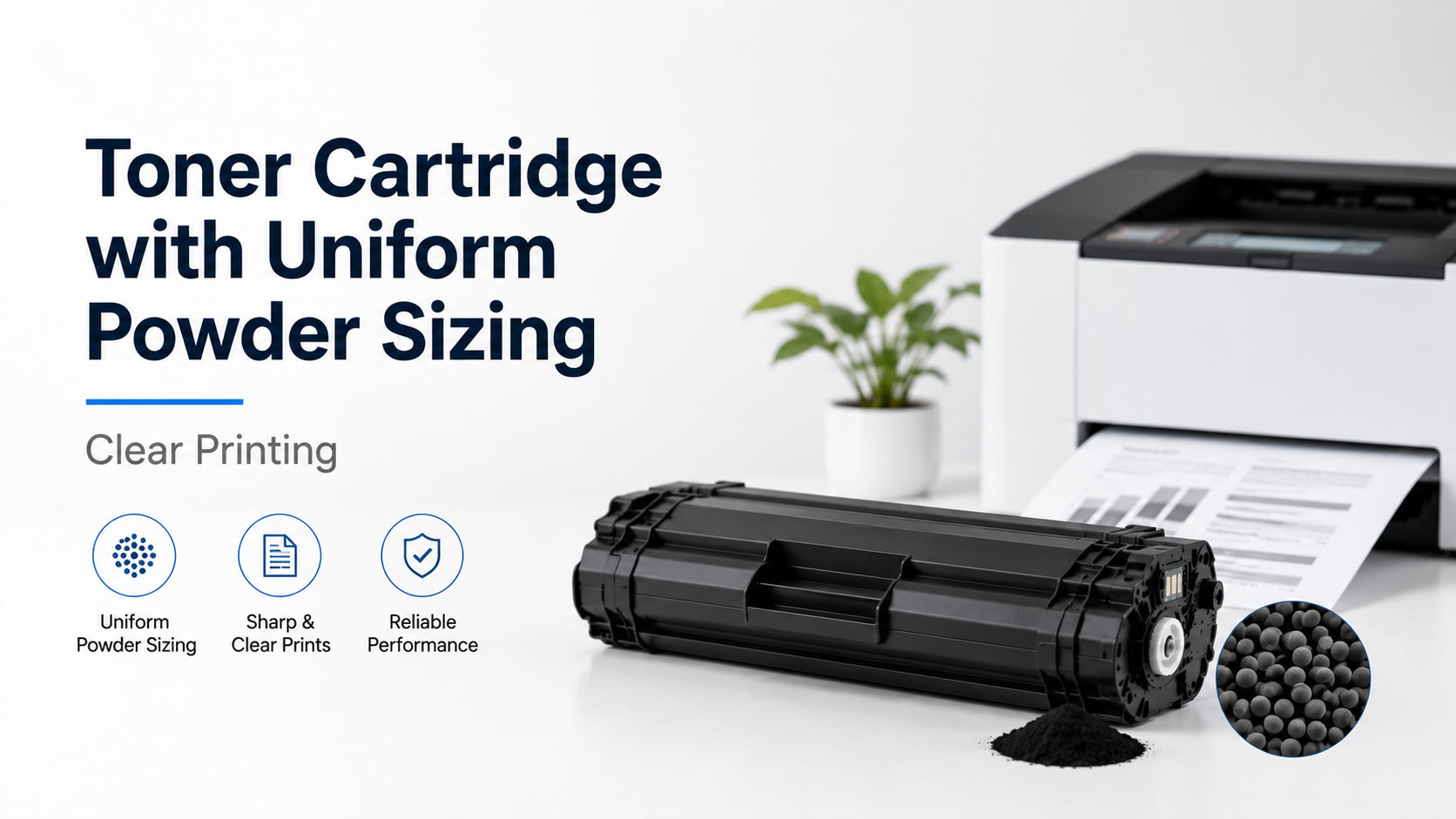
A toner cartridge is a key component in laser printing systems, designed to hold fine toner powder used for producing printed output. Unlike inkjet systems that rely on liquid ink, laser printing uses dry toner transferred through electrostatic charge and heat.
At Super Ink, we focus on providing reliable toner solutions that ensure stable performance, consistent print quality, and efficient printing operations across compatible laser printer systems.
What Is a Toner Cartridge?
A toner cartridge is a replaceable unit inside a laser printer that contains:
Fine toner powderThe core printing material
Developer unitPresent in select models
Drum interface systemConnects toner to the imaging drum
Charge control elementsManage electrostatic behavior
Sealed storage chamberKeeps toner powder contained
The toner powder inside is made of:
- Pigment (for color or black output)
- Thermoplastic polymer particles
- Charge control agents
This composition allows toner to adhere to charged areas on a drum before being fused onto paper using heat and pressure.
How Laser Printing Works
Laser printing follows a synchronized process that converts digital data into physical output with precision:
- The printer receives digital data
- A laser creates an electrostatic image on the imaging drum
- Toner particles attach to the charged areas
- Paper passes through a transfer unit
- Heat and pressure permanently bond the toner onto the paper
This process supports sharp text, smudge-resistant output, and efficient high-volume printing.
Types of Toner Cartridges
Different printers use different toner systems depending on design and usage needs.
Standard Yield Cartridge
- Designed for moderate printing needs
- Lower upfront cost
- Suitable for home or small office use
High-Yield Cartridge
- Contains more toner
- Supports larger print volumes
- Reduces cost per page
Drum-Integrated Cartridge
- Drum and toner combined in one unit
- Easy replacement
- Common in compact printers
Separate Drum System
- Toner cartridge and drum unit are separate
- More efficient for long-term usage
- Reduces waste and maintenance costs
The performance of a toner cartridge depends on compatibility, toner quality, and printer calibration.
Key Components and Function
Inside a laser printer, the toner cartridge works closely with multiple components:
- Toner reservoir stores fine powder
- Developer roller controls toner transfer
- Imaging drum receives electrostatic charge
- Laser unit defines print pattern
- Fuser unit applies heat and pressure
Each part works in synchronization for accurate output. When functioning correctly, a toner cartridge supports:
- Even toner distribution
- Stable print density
- Clear text edges
- Consistent page output
Common Toner Cartridge Issues
Toner cartridges may experience performance issues due to environmental conditions or improper handling. Common problems include:
- Humidity can cause toner clumping
- Uneven print density may occur
- Prints may appear faded or light
- Leakage during installation in rare cases
- Drum contamination over time
- Repeated marks on printed pages
Using a reliable toner cartridge and proper maintenance can help reduce these issues.
Simple Printer Care Tips
Proper maintenance helps extend cartridge life and improve print quality. Helpful practices:
- Store cartridges in a dry, cool environment
- Avoid shaking or damaging sealed units
- Install cartridges carefully to prevent spills
- Clean internal printer components regularly
- Replace cartridges when print quality begins to decline or toner levels become low
These steps help maintain smooth printing performance over time.
FAQs
What is a toner cartridge used for?
It is used in laser printers to store and supply toner powder for printing text and images.
How long does a toner cartridge last?
It depends on page yield and usage, but typically ranges from hundreds to thousands of pages.
Why do prints look faded?
Faded prints may occur due to low toner levels, drum wear, or uneven toner distribution.
What is the difference between toner and ink?
Toner is a dry powder used in laser printers, while ink is a liquid used in inkjet printers.
Reliable laser printing performance. A well-designed toner cartridge supports sharp text output, stable performance, and reliable document production across everyday use. With proper selection, maintenance, and reliable support from Super Ink, users can achieve consistent, high-quality printing results across all usage environments.